
October 13, 2026 ~ Shabbat NOAH. SIGAH-IRAQ.
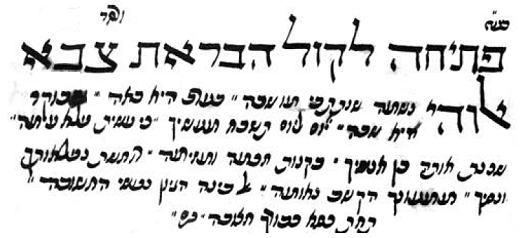
The Arabic word Sabi means baby boy, and this is why Maqam Saba - צבא - is used for the Berit Milah (circumcision). Saba is used for Torah portions that contain either births, covenants (berit), a multitude of laws, or the reference to an army (Hebrew: Saba).
The Jews of Damascus use this maqam to express sad events.
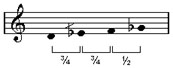
Saba tetrachord: starting on D
| Pizmon | Page | Song | Commentary | Recordings | Application |
|---|---|---|---|---|---|
| 451.99 | 375 | פזמונים במקאם צבא |
Assorted Songs |
||
| 452 | 375 | עליון רם גדול | Ezra Attia Manuscript British Library Or. 10375 |
E. Menaged I. Cabasso- Qaddish I Cabasso Isaac Cabasso- Nishmat Moshe Dwek I CABASSO NISHMAT I CABASSO QADDISH I CABASSO QEDUSHA |
נשמת |
| 453 | 376 | יהלל לאל נורא |  Raphael Tabbush This pizmon (SABA, page 376), whose opening words are translated as “He Will Give Praise to the Awesome God with Sounds of Song,” is a masterpiece in the Syrian Jewish tradition. Composed by H Raphael Antebi Tabbush (d. 1918), perhaps in honor of the birth of his brother's son ("Isaac ben Abraham"), it has the acrostic "Isaac" (יצחק) and has 4 stanzas; with the first stanza also serving as the chorus. The song opens with a promise that the Jewish nation, and “every living thing that has breath” (alluding to Psalms 150:6), will praise God in song. The second stanza asks God to remember the covenant of Isaac (son of Abraham), gather the Jews from exile, and bring them to the city of Jerusalem where they will praise Him in happiness. The third stanza asks God to grant us “life, grace, and kindness,” and give us a sign, or better yet, a miracle; similar to those experienced in the days of Moses. But the miracle now will be the redemption and to quickly bring the Messiah. The final stanza, in a very moving petition, beseeches God to "accept to the prayers of his nation"; this includes protecting us, saving us, healing us, and having mercy on us. Finally, the song concludes, that when all these prayers have been answered, the prophecies of Isaiah will now be fulfilled and we will “sing to God a new song” (Isaiah 42:10), and we will encounter new priests serving in a new Beit Hamiqdash (temple) in the rebuilt city of Jerusalem. Tabbush Manuscript Raphael Tabbush This pizmon (SABA, page 376), whose opening words are translated as “He Will Give Praise to the Awesome God with Sounds of Song,” is a masterpiece in the Syrian Jewish tradition. Composed by H Raphael Antebi Tabbush (d. 1918), perhaps in honor of the birth of his brother's son ("Isaac ben Abraham"), it has the acrostic "Isaac" (יצחק) and has 4 stanzas; with the first stanza also serving as the chorus. The song opens with a promise that the Jewish nation, and “every living thing that has breath” (alluding to Psalms 150:6), will praise God in song. The second stanza asks God to remember the covenant of Isaac (son of Abraham), gather the Jews from exile, and bring them to the city of Jerusalem where they will praise Him in happiness. The third stanza asks God to grant us “life, grace, and kindness,” and give us a sign, or better yet, a miracle; similar to those experienced in the days of Moses. But the miracle now will be the redemption and to quickly bring the Messiah. The final stanza, in a very moving petition, beseeches God to "accept to the prayers of his nation"; this includes protecting us, saving us, healing us, and having mercy on us. Finally, the song concludes, that when all these prayers have been answered, the prophecies of Isaiah will now be fulfilled and we will “sing to God a new song” (Isaiah 42:10), and we will encounter new priests serving in a new Beit Hamiqdash (temple) in the rebuilt city of Jerusalem. Tabbush Manuscript |
E. Menaged G. Shrem E. Sayegh Fule Yanani Sion Recording Iraqi- Maqam Saba Nahari- Nishmat Charlie Chehebar- Nishmat DMB - Se Fezura - Naqdishakh |
נקדישך |
| 454 | 377 | לעם אביר | Raphael Tabbush The original Arabic song (Adak Amir) was sung by Abdel Hai Hilmi. Itamar is singing exactly based on the version sung by the nephew of Hilim, Saleh Abdel Hai Salah. The Pizmon is clearly based on the Arabic song as the syllables match exactly. This pizmon fits better in the Bayat maqam. Thanks to Joey Harari, Jerusalem. |
Itamar Dweck |
|
| 455 | 378 | אתה הוא יחיד | Tabbush Manuscript British Library Or. 10375 | נשמת | |
| 456 | 379 | טובך לעולם | Arabic of it HOBBAK YA SALAM sung by Saleh 'Abd El Hai. Hakham Moshe Ashear used it for Naqdishakh for Perashat Ki Tesse. |
M Tawil Recording D Binker-Duek - Naqdishakh Yehezkel Zion |
נקדישך |
| 457 | 379 | אל מרוב חסדך |
Arabic Recording Y Bozo - Pizmon and Qaddish Yaaqob Bozo - Nishmat Shabetai Laniado- Nishmat |
נשמת | |
| 458 | 380 | יחיש מבשר אבי |  This pizmon (SABA, page 380), which translates as "Our Father Will Hasten the Messenger," is an important song about praying for the redemption. This song is composed by H Raphael Tabbush (d. 1918) to the Arabic melody of "Ya'ish WeYe'Shaq Qalbi". In this song, the author asks God to answer our prayers, to forgive our transgressions, to save us from our enemies who are planning acts of violence on us, and to hasten the arrival of Eliahou the Prophet who will announce the redemption of the Jewish people. Traditionally, this song is associated with the last day of a Shalosh Regalim festival (Pesah, Shabuot, Sukkot); the time when we most yearn for the redemption and the rebuilding of the Bet HaMiqdash. H Moshe Ashear applied this melody for the Qaddish of Shabbat Naso in 1937 and 1938 (the Shabbat after the Shabuot festival). In addition, Cantor Isaac J Cabasso applies this melody to Nishmat on the last day of Pesah and Shemini Asseret. This pizmon (SABA, page 380), which translates as "Our Father Will Hasten the Messenger," is an important song about praying for the redemption. This song is composed by H Raphael Tabbush (d. 1918) to the Arabic melody of "Ya'ish WeYe'Shaq Qalbi". In this song, the author asks God to answer our prayers, to forgive our transgressions, to save us from our enemies who are planning acts of violence on us, and to hasten the arrival of Eliahou the Prophet who will announce the redemption of the Jewish people. Traditionally, this song is associated with the last day of a Shalosh Regalim festival (Pesah, Shabuot, Sukkot); the time when we most yearn for the redemption and the rebuilding of the Bet HaMiqdash. H Moshe Ashear applied this melody for the Qaddish of Shabbat Naso in 1937 and 1938 (the Shabbat after the Shabuot festival). In addition, Cantor Isaac J Cabasso applies this melody to Nishmat on the last day of Pesah and Shemini Asseret. |
M. Nadaf I. Cabasso - Nishmat S. Salem M Tawil Arabic- Sheikh Yousef El Manyalawi I. Cabasso - Nishmat Recording Nissim Tawil Shlomo Antebi - Qaddish Moshe Dwek Recording I CABASSO NISHMAT Morris Arking |
נשמת |
| 459 | 381 | נורא תתן כח לי | Tabbush Manuscript |
I Cabasso R Elnadav- Qaddish Maury Blanco Shabetai Laniado & Qaddish Shlomo Antebi- Qaddish I CABASSO QADDISH |
קדיש |
| 460 | 381 | היום על עדרי | Raphael Tabbush |
I Cabasso Recording Shabetai Laniado |
|
| 461 | 382 | אדום ליי לו | Raphael Tabbush |
Arabic M. Mustachi J. Mosseri Recording Shabetai Laniado |
|
| 462 | 382 | אל חשקי כלו | Maqam Girkah |
Arabic Maury Blanco |
|
| 463 | 383 | טל אל רפא | Raphael Tabbush Maqam Mahour |
E. Sayegh Recording Maury Blanco |
|
| 464 | 383 | ענג למו |
Hayim Eliyahou |
||
| 465 | 384 | ירעד לבי | ישראל בן משה Attiah Manuscript Abraham Sitehon Manuscript Mosseri-Kozli Manuscript |
Recording |
|
| 466 | 385 | יומא טבא דרבנן | Yeshaya Bar Misvah. |
G. Shrem Fule Yanani Recording R Barzani- Naqdishakh Eliahou Ozen- El Hahodaot D Binker-Duek Moshe Dwek |
|
| 467 | 385 | רם אמור | Raphael Tabbush Hamaoui Manuscript Tabbush Manuscript A Z Idelsohn notes, 1923 |
Fule Yanani I. Cabasso - Nishmat I Cabasso Recording I Cabasso- EH I CABASSO NISHMAT I CABASSO EL HAHODAOT |
|
| 468 | 386 | רחום לעד | Raphael Tabbush |
Y. Bozo Y Bozo 2 |
אל ההודאות |
| 469 | 386 | יה עזי אתה |
Y Bozo Yosef Bozo 2 S Salem Recording |
||
| 470 | 387 | למן אתפלל למן | Raphael Tabbush Hamaoui Manuscript |
I Cabasso Recording Shabetai Laniado |
|
| 471 | 388 | בנין מעוני תמהר | Tabbush Manuscript |
I Cabasso Recording Shabetai Laniado I CABASSO MIMISRAYIM Meir Levy: Naqdishakh |
|
| 472 | 389 | יה אודה לך יה | Raphael Tabbush Hamaoui Manuscript Tabbush Manuscript |
I. Cabasso J. Mosseri Recording Shabetai Laniado Shabetai Laniado- Hashem Melekh Shelomo Tob Cohen I CABASSO SHAVAT ANIYIM I CABASSO SEMEHIM Meir Levy: SA |
שועת עניים |
| 473 | 389 | יה אלי צור משגבי | Raphael Tabbush Shabbat Zakhor, Ki Tisa, Ki Tesse. Hamaoui Manuscript British Library Or. 10375 |
G. Shrem G. Shrem Recording G Shrem Shabetai Laniado |
|
| 474 | 391 | אני לשמך מלין אחביר | Raphael Tabbush Tabbush Manuscript |
G Shrem I Cabasso R Elnadav- Naqdishakh I CABASSO QEDUSHA |
נקדישך |
| 475 | 391 | ארנן לשמך | Raphael Tabbush Tabbush Manuscript |
||
| 476 | 392 | אגיד אנא | Arabic: "Ya Burdana". |
Arabic Shabetai Laniado F Samra |
|
| 477 | 393 | אלי תמוגג | Raphael Tabbush |
E. Marcus E. Menaged Shabetai Laniado |
ה' מלך |
| 478 | 395 | יה חנון |
Hayim Eliyahou Shabetai Laniado |
||
| 479 | 395 | יה רם חיש |
M. Mustachi Recording |
||
| 480 | 396 | איום גאל היום | |||
| 481 | 397 | יה אל גדול ונאדר | Tu Bishvat/ Baqashot. The text of this song has nothing to do with Tu Bishvat except for the references to inviting guests to eat different fruits. The reason why this tune is used for Tu Bishvat is based on a Judeo-Arabic song with the same tune as this. Tabbush Manuscript |
M. Nadaf G. Shrem I Cabasso |
שמחים |
| 482 | 398 | אל בורא כל נשמה | |||
| 483 | 398 | ענני יה |
I. Cabasso I. Cabasso - Nishmat |
נשמת | |
| 484 | 399 | יה הוריד נא | Hamaoui Manuscript |
G. Shrem G. Shrem I Cabasso Moshe Dwek Moshe Dwek - Mimisrayim I CABASSO MIMISRAYIM |
ממצרים |
| 485 | 400 | אל בידו | אליהו חזק "El Beyado Yado Yado," (SABA, page 400) translated as "God, with His hand, will redeem Israel his servant" is used to herald the month of Nisan, the month of redemption, and the Pesah festival. The acrostic of this song is "Eliahou Hazaq" (אליהו חזק); referring to Eliahou HaNabi, the one who will announce the redemption. The author of this song is most probably H Raphael Antebi Tabbush from Aleppo, Syria. The melody of this is from the Arabic song "Hai Kardo Kardo." Originally, there were two separate texts written for this melody; one entitled "Beyado" (not discussing the month of Nisan) and the other called "El Beyado." Eventually, the author merged the two songs into one; retaining the first stanza of the "Beyado" song (אהבתיך צור ידידי) and putting it into the holiday-oriented "El Beyado" song. This pizmon can be sung as PIZMON SEFER TORAH on the Shabbat prior to Rosh Hodesh Nisan, and the melody of this pizmon, as per H Isaac Cabasso, can be applied to Mimisrayim on Shabbat Hagadol. Hamaoui Manuscript Tabbush Manuscript Tabbush Manuscript |
G. Shrem 2 I Cabasso Recording Y Nahari I Cabasso I CABASSO MIMISRAYIM |
כתר |
| 486 | 401 | יה אלי הנחל לי | Raphael Tabbush Should be Bayat. The Arabic of this is called "El Arsiyah" sung by Sabri Moudallal. Hamaoui Manuscript |
J. Mosseri Charlie Chehebar- Qaddish Shabetai Laniado |
הללויה |
| 487 | 401 | תדד שנת עיני |
E. Menaged |
||
| 488 | 402 | רחום דל דאגי מני | Raphael Tabbush |
E. Menaged Moshe Diib Laniado Arabic: Ya Daqaqitil Beini Shabetai Laniado I CABASSO EL HAHODAOT Meir Levy: Mimisrayim |
כתר |
| 489 | 403 | קומי יונה | Israel Najara |
E. Menaged I. Cabasso Iraqi Recording |
|
| 490 | 403 | אל חי ונורא | Abraham Shabbat Bereshit. |
I. Cabasso Fule Yanani G. Shrem I Cabasso Recording Moshe Dwek I CABASSO QADDISH |
קדיש |
| 491 | 404 | ערבים שבת אחים |
G. Shrem I Cabasso Moshe Dwek Moshe Dwek - HM Moshe Dwek - SA , BY |
||
| 492 | 405 | יהי שלום בחילנו | This pizmon (SABA, page 405), whose title is translated as "May Peace Be Within Our Walls," is one of the oldest Berit Milah songs to be in continuous use. A version of this song appears in Mahzor Aram Soba of 1527, the first printed prayer book of the native Aleppo Jewish community, and a different version, with the acrostic “Yehoshua Hazaq” (יהושע חזק) appears in subsequent editions in the nineteenth century. In our Red Book, we have a combination of the two versions. In this song, we are celebrating the baby boy by saying that his birth is a sign of our good fortune and a sign of our future redemption. Blessings about this baby include that he should grow up in the shadow of the Almighty, he should be active in teaching Torah, he should have a long life, and always have his table set. When he grows up, his name will be well-known and loved by God-fearing people, and they will consider him to be a leader of their generation, like Samuel the Prophet. In the newer “Yehoshua Hazaq” version, there is no reference to the Berit Milah. Instead, the last stanza (חזק) wishes for the baby to be considered very close to God; always dwelling in His midst. To add a reference to the Berit Milah, modern editions of this song remove the final stanza of the “Yehoshua Hazaq” version, and re-implement the last stanza of the original 1527 version. This last stanza of the 1527 version, beginning with the word “HaNimol” (הנמול), further blesses the baby saying that "The circumcised in his nation will live for his father and mother, and may his God be with him and with the whole House of Israel.” Mahzor Aram Soba 1560 Shire Zimrah, Algiers, 1889 |
SCC Choir Fule Yanani - Different melody M Tawil Recording Recording Recording A Mouhadeb- Sigah Moshe Dwek Dr Isaac S Mordecai |
|
| 493 | 406 | אערך מהלל ניבי | אנכי דוד בן אהרון חסין חזק This pizmon (SABA, page 406), Eerokh Mahalal Nibi, is composed by the most celebrated Moroccan poet, Rabbi David b. Aharon Hasin (1727-1792). There are 19 stanzas in this long pizmon, making the acrostic: אנכי דוד בן אהרון חסין חזק. The chorus of "Likhod Hemdat Lebabi Eliyahu HaNabi,” translated as "In honor of the beloved of my heart Eliyahu the Prophet,” is repeated after each stanza. This song provides a poetic compilation of the various reasons why Eliyahu HaNabi, discussed prominently in 1 Kings, is honored. In addition, the song makes references to Midrash; saying that Eliyahu “is” [a reincarnation of] Pinehas the Priest. The main association of this pizmon is for a Berit Milah, because it is traditionally said that Eliyahu's presence is at each Milah. It is also associated with Shabbat Pinehas (or Balaq), because it is when we read about the story of Pinehas and his heroic actions. In addition, the story of Eliyahu HaNabi is read in the Haftara of this Torah portion. Yabess Manuscript |
J. Mosseri Fule Yanani Recording Recording Recording Moshe Dwek Yair Hamra- SABA version Meir Levy: Qaddish |
שמחים |
| 494 | 409 | אהלל ואגילה | Milah Tabbush Manuscript |
I Cabasso Recording Yaaqob Bozo |
אל ההודאות |
| 495 | 410 | אתה אהובי | Abraham I Antebi Ata Ahubi (SABA, page 410), translated as "You are my Beloved," is the first song heard in a young boy's life; at his Berit Milah at eight days old. Composed by the illustrious H Abraham I Antebi (1765-1858), Chief Rabbi of Aleppo, the song has the acrostic "Abraham Hazaq." Each of the 6 stanzas end with the word "Eyn," meaning eye. In the first stanza, the author thanks God for "Him giving happiness in my heart" and is comforted that "in You, I can lean." The next four stanzas refer to the Berit Milah, the covenant between God and Abraham, and allude to some of its festive rituals. The last stanza, in the original version of the song, states "Strengthen Aram Soba (Aleppo), the good city, and also the [resting] place of the master, Ezra [HaSofer], a fine pearl that the eye shall see." In later publications, in an attempt to standardize the song, this last stanza was altered to remove the references to Aleppo. This melody is applied to Naqdishakh preceding a Berit Milah as well as on Shabbat Lekh Lekha and Tazria. Attiah Manuscript Yabess Manuscript Abraham Sitehon Manuscript Shire Zimrah, Algiers, 1889 |
M Tawil Fule Yanani I Cabasso Recording Recording R Barzani- Semehim Nahari- Naqdishakh Moshe Dwek Moshe Dwek - Naqdishakh I CABASSO QEDUSHA I CABASSO QEDUSHA Meir Levy: Naqdishakh |
נקדישך |
| 496 | 411 | מה טוב מה נעים | Mordechai Abadi This pizmon (SABA, page 411), whose opening words are “How Good, How Nice Are Things In Their [Proper] Time,” is a song for the Mila; the circumcision ceremony. It is composed by the Aleppian sage, H Mordekhai Abadi (1826-1884), author of “Dibre Mordekhai.” The acrostic is “Mordekhai Hazaq Abadi,” and each of the 6 stanzas is followed by the famous chorus “Eliahou, Mebaser Hu...”. In the chorus, we recall Eliahou the Prophet as one who announces the redemption and who attends every Mila ceremony. There are references in the song to three blessings recited: "HaGefen," “Al HaMila,” and “Koret HaBerit," as well as a reference to the tradition of setting up a special chair for Eliahou, who is referred to as the “angel of the covenant.” At the song's conclusion, in the merit of Abraham (the father of the covenant), there is a prayer to rescue (like in the days of Mordekhai) all those who partake in the festive meal of this very special Misvah (one which weighs equivalent to all the other laws combined). In differing sources, this song is classified as either Maqam SABA, BAYAT or NAWAH, and in the morning prayers of a Mila, this melody can be heard for El Hahodaot. Abraham Sitehon Manuscript A Z Idelsohn notes, 1923 British Library Or. 10375 |
M Tawil Fule Yanani I Cabasso Recording Moshe Dwek Meir Levy: SA Meir Levy: Qaddish |
אל ההודאות |
| 497 | 412 | מבטן ידיד יה קדש | Mordechai Abadi Milah Abraham Sitehon Manuscript |
Morris Elmann Fule Yanani A Mouhadeb D Kassin - Mimisrayim |
|
| 498 | 413 | יחון אל צור | יוסף This pizmon (SABA, page 413), whose title can be translated as "The Rock Will Find Favor," is a song associated with the Berit Milah. What makes this song unique is that it is traditionally chanted while the actual circumcision is taking place. One of the earliest versions of this song can be found in Mahzor Aram Soba (1527, 1560), and it's four stanzas spell the author's first name: Yosef (יוסף). This song is a prayer for God to find favor for this new baby boy who is about to enter His covenant; the Berit Milah circumcision that takes place on the baby's eighth day. The second stanza says that the knife will be taken to remove the baby's foreskin, and this will redeem him from any decrees of pain, danger, and trouble in life. The third stanza says that the baby will be blessed with success (like a strong lion) and wisdom (like King Solomon). The fourth and final stanza continues with a prayer that God will help this baby in merit of the blood of the Berit and will command His angels to always protect him. This melody, which is described more like a chant, cannot be applied to any of the pieces of prayers. Attiah Manuscript Mahzor Aram Soba 1527 |
J. Mosseri Fule Yanani Recording |
|
| 499 | 414 | היום גאל היום | |||
| 500 | 414 | עלובה ועזובה | Raphael Tabbush |
||
| 501 | 415 | חיש משגבי | Raphael Tabbush "Hish Misgabi" (SABA, page 415) is a pizmon composed by H Raphael Antebi Tabbush in honor of Purim. It has been said by Rabbi Aaron Hamaoui of Boston that H Raphael Antebi Tabbush (d. 1918) was blind in his later years, and he needed his students to assist him to walk in the shuq, market, in Syria. One day, as he was walking, he heard the catchy Arabic melody “Hisbi Rabi“ being chanted in the market place. H Tabbush then rushed home, and immediately, he dictated words to his student, H Eliahou Hamaoui, the grandfather of Rabbi Aaron Hamaoui, to fit this melody. This ended up being “Hish Misgabi”; a song in honor of Purim. This pizmon has the acrostic “Raphael Hazaq”, and has 5 stanzas (in addition to the first verse, which serves as the chorus). The melody of this pizmon can be applied to Keter or Va’ani Tefilati, but should only be applied in close proximity to Purim. Hamaoui Manuscript Tabbush Manuscript |
Yosef Hamaoui I. Cabasso G. Shrem G. Shrem Recording I Cabasso Recording |
כתר |
| 502 | 416 | אוחיל יום יום | Eliahu Hazzan This is a "remake" of the other song with the same title (p.345). In praise of Jerusalem and its prominent place throughout Jewish history. Both songs have the same melody. |
G. Shrem I. Dayan (Alternate version) Iraqi Recording |
|
| 503 | 417 | ידידי רועי מקימי | ישראל חזק Yedidi Ro'ee Meqimi (SABA, page 417), whose acrostic is "Yisrael Hazaq," is written by H Israel Najara (1555-1625). This poem compares God to a shepherd who takes care of a flock of sheep. The sheep, mentioned at the end of each stanza, is a metaphor for the people of Israel. It is God, the shepherd, who rescues Israel, the sheep, from her enemies and who will gather a scattered people back to the Holy Land to rebuild the Temple. This relates to the Torah portion of Vayesse due to the reference in the last stanza to Genesis 29:9 when "Rachel comes out with her sheep." When Jacob is a refugee, it isn't until he spotted Rachel that he finds the hope needed to survive. On Shabbat Vayesse, the melody of this pizmon is traditionally applied to Semehim. Although SABA is not the "Maqam of the Week," the Hazzan should switch from AJAM to SABA shortly before Semehim to apply this important melody. Attiah Manuscript Yabess Manuscript Mosseri-Kozli Manuscript |
G. Shrem Fule Yanani G. Shrem Recording Recording R Barzani- Mimisrayim I Cabasso - Semehim Hebrew Pizmon I CABASSO SEMEHIM |
שמחים |
| 504 | 418 | איש אלהים קדוש הוא | Ben Ish Hai Lag LaOmer. For R' Shimon Bar Yochai. Written by the "Ben Ish Hai" of Babel in the 19th century. Song is an acrostic (Aleph Bet) and has many allusions to the life of R' Shimon. Abraham Sitehon Manuscript |
Fule Yanani G. Shrem Recording S Antebi- Pizmon Dr Isaac S Mordecai |
כתר |
| 505 | 422 | אנה אלך מרוחך | ישראל Attiah Manuscript Yabess Manuscript Abraham Sitehon Manuscript |
G. Shrem G. Shrem Recording Recording Agudat Dodim (Buenos Aires)- Mimisrayim I Cabasso- Mimisrayim I Cabasso Moshe Dwek Moshe Dwek Moshe Dwek - Semehim I CABASSO MIMISRAYIM |
אל ההודאות |
| 506 | 422 | לבת מעונה | Raphael Tabbush |
J. Mosseri |
|
| 507 | 423 | רעיה את שירי | Raphael Tabbush Hamaoui Manuscript Tabbush Manuscript |
G. Shrem |
|
| 508 | 423 | עזי עזי עזי עזי וזמרת יה | Ezekiel Hai Albeg This pizmon (SABA, page 423), whose chorus alludes to the Song of the Sea (Exodus 15) as well as Isaiah 54, has opening words that are translated as "My Strength and My Defense is from God; You will not be put to shame or disgrace for God will comfort you". This song is composed by Cantor Ezekiel Hai Albeg as indicated by the acrostic: Yehezqel Hai. In this song, the author laments about his inability to go back to the Land of Israel due to being stuck in exile and surrounded by his enemies. The opening words in the Hebrew song "Ozi Ozi Ozi Ozi VeZimrat Ya" closely resembles the opening words in the corresponding Arabic song "Hizee Hizee Hizee Hizee Mahrumatekh." The Arabic song is by a famous Syrian Jewish singer named Rachel Samocha (1895-1955), also known as Fayrouz Al Halabiya. There are 4 stanzas in this song and a recurring chorus (Ozi Ozi). The melody of this song can be applied to El Hahodaot on weeks of Maqam SABA. This melody, as well as the pizmon itself, is said to be closely linked to Shabbat Ki Tesse due to the words of consolation "Lo Teboshi Lo Tikalmi" from that weeks Haftarah portion (Isaiah 54:4). |
G. Shrem G. Shrem Recording R Barzani- Hahodaot Moshe Dwek Moshe Dwek - EH Meir Levy: Semehim |
אל ההודאות |
| 508.1 | 426e | בנה לעירך | Raphael Tabbush Hamaoui Manuscript |
Recording |
|
| 508.2 | 424a | אך טוב לישראל | Abraham I Antebi אברהם. Composed by H Abraham Antebi (1765-1858), Chief Rabbi of Aleppo from 1817. Pizmon found in "Ohel Yesharim" book from 1843. Attiah Manuscript Abraham Sitehon Manuscript Mosseri-Kozli Manuscript Mosseri-Kozli Manuscript |
||
| 509 | 425 | אל מוכתר בכתר | Moses Ashear פיוט על סדר אלף בית אומרה- Alludes to 10 Sefirot. Ashear applies this tune often to Naqdishakh. Ashear Manuscript |
M. Nadaf I. Cabasso I. Cabasso - Nishmat E. Menaged - Nishmat I Cabasso- El Mukhtar- Nishmat I Cabasso 2 R Elnadav- Nishmat I CABASSO NISHMAT |
נשמת |
| 510 | 426 | יחידי אל צור | Moses Ashear Ashear Manuscript |
Arabic |
|
| 510.5 | 426a | לי יה לי יה יבנה יה | NLevy |
Recording I Cabasso- EH Moshe Dwek Moshe Dwek Moshe Dwek - Nishmat |
|
| 511 | 427 | רצני אהוב | Ezra Dweck and Gabriel Shrem This pizmon (SABA, page 427), whose title can be translated as “My Beloved Will Want Me,” is a song that describes the love between man and his creator. The Hebrew words to the pizmon were composed by H Ezra Dweck with the assistance of Hazzan Gabriel A Shrem. It is written in honor of the great rabbi, H Baruch Ben Haim, who moved into the Syrian Jewish community of Brooklyn circa 1950 and got married to Charlotte, the daughter of the Chief Rabbi, Jacob S Kassin. The melody of this is from an Arabic song by the famous and influential Syrian-Egyptian composer, singer, and Oud player, Farid Al-Atrash (1910 - 1974). The song, called “Ghali Ya Bouy” (Dear Boy), was featured in the 1948 film called “Bolbol Effendi” (Mr Nightingale), and became wildly popular and beloved throughout the world; our community included. The melody of this song has been adapted to many pieces of prayers, such as Halleluya (Psalm 150), when prayers are being conducted in Maqam SABA. In addition, this song became associated with Pesah, and the entire month of Nissan, due to the references to them mentioned in the song’s second stanza. Leaflet Photograph of H Barukh Ben Haim |
G. Shrem Part 1 G. Shrem Part 2 G. Shrem 2 G. Shrem Recording Eliahou Ozen- Qaddish Isaac Cabasso- Qaddish Shrem and Cabby E Sayegh Moshe Dwek Moshe Dwek - Halleluya Moshe Dwek - Qaddish I CABASSO QEDUSHA I CABASSO QEDUSHA Meir Levy: Qaddish Meir Levy: Naqdishakh |
הללויה |
| 512 | 428 | יה מוראך בי | Ezra Mishaniye Bar Misvah. |
M. Nadaf - Qaddish M. Nadaf - Qaddish 2 Shelomo Tob Cohen |
קדיש |
| 512.05 | 429a | יודו שמך אלוהים משגבי | Shelomo Hazzan Hazaq |
J Mosseri |
|
| 512.09 | 429b | רנה רנה רנה | דוד בוזלי Shaare Zimra, Argentina book page 384. Shaare Zimra, Argentina |
F. Yanani |
