
October 13, 2026 ~ Shabbat NOAH. SIGAH-IRAQ.
1934-2021
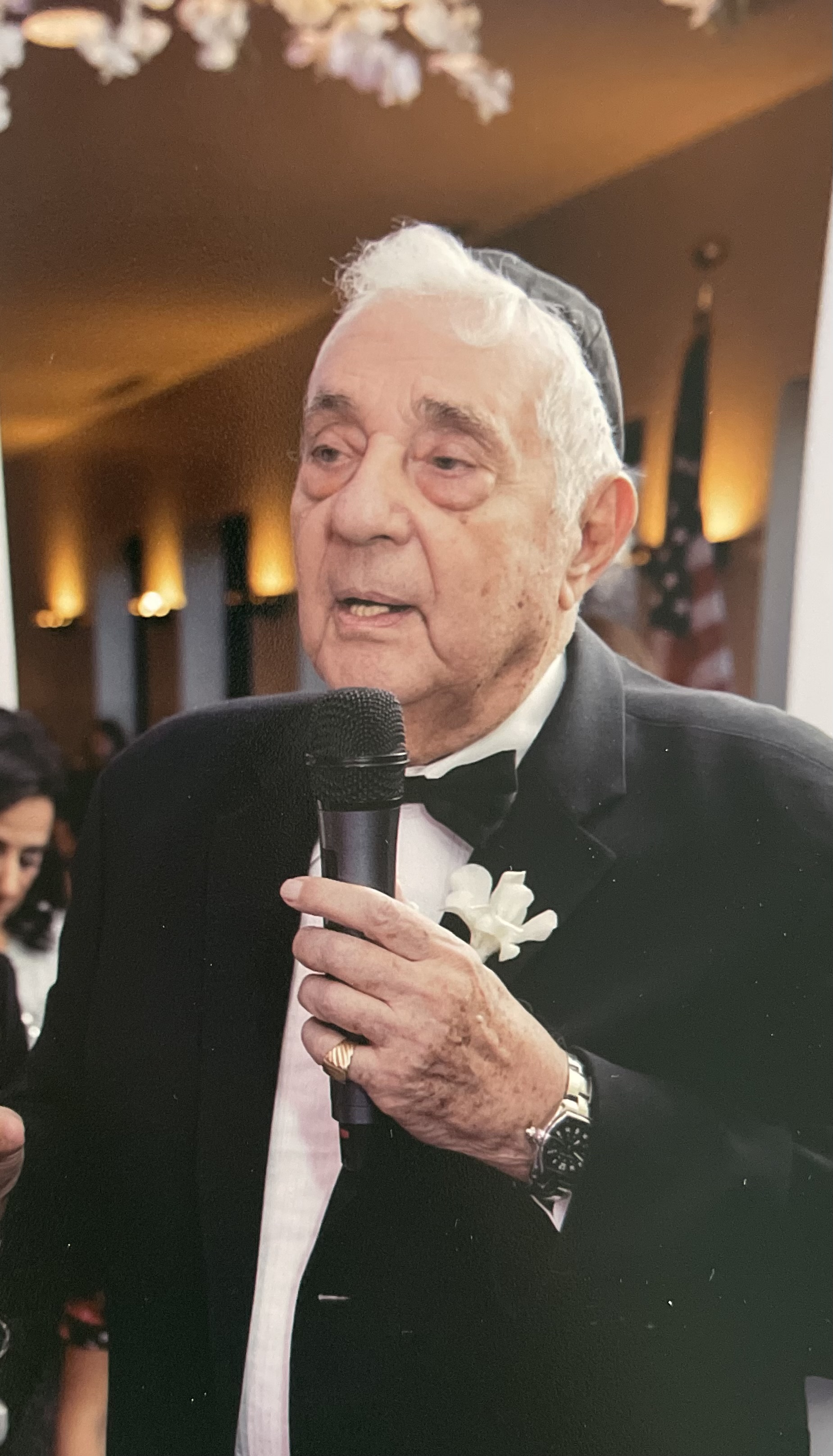
David Ezra Tawil (2 Feb 1934- 2 Feb 2021) was born in Brooklyn, NY, to his mother, Rachelle Maslaton (1901-1996), and father, Ezra S Tawil (1898-circa 1940).
Throughout his life, he was a Hazzan and an important participant in the prayer services in any of the various synagogue that he attended. He officiated at Ohel YisHak, the Sephardic Synagogue of Allenhurst, in New Jersey, for several years on the High Holidays as well as many Shabbat services throughout the summer. He also was an active participant in Congregation Ahi Ezer as well as Shaare Zion in Brooklyn.
He comes from a family of expert Hazzanim and Torah readers. His brothers were Hazzan Max E Tawil, who read the Torah in Shaare Zion Congregation for many decades, and Hazzan Saul E Tawil, who did the same in Congregation Beth Torah. His maternal grandfather, from whom he developed his love for learning was none other than the beloved Hakham Murad Mordekhai Maslaton A”H (1876-1959) originating from Damascus and emigrated to the United States to help lead the Syrian Community of Congregation Ahi Ezer of 71st Street in Brooklyn.
David Tawil is survived by his loving wife, Jeanette, and four children: Rochelle, Vivian, Leslie, and Ezra, and 14 grandchildren. He loved spending time with his extended family, especially his siblings.
He is remembered for infusing life into the melodies of old. When he officiated as Hazzan, he uplifted everyone to greater heights. His sweet voice and his pleasant personality will never be forgotten.
Personal Essay Written by great grandson Edmond Chalom
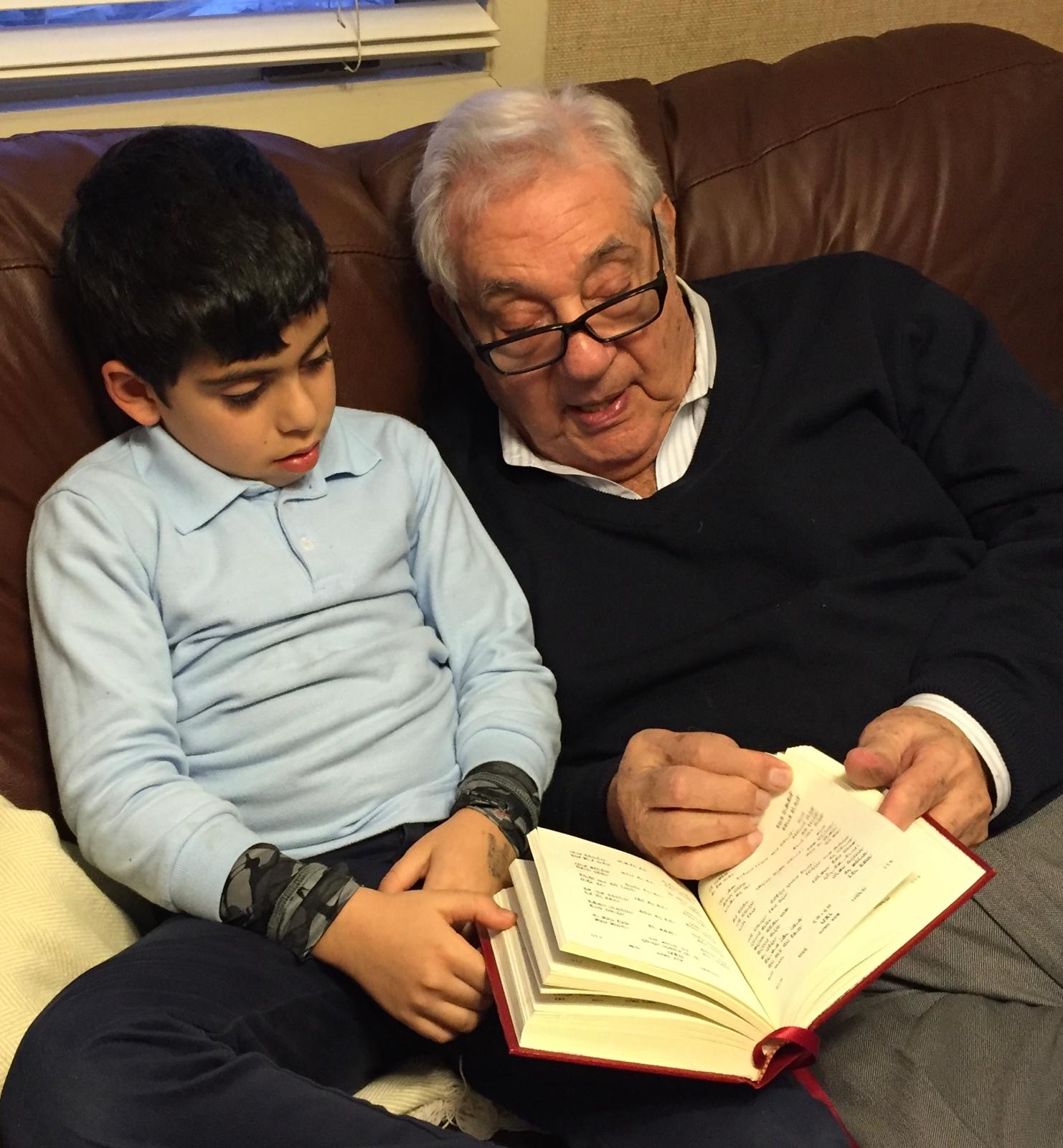
On Shabbat mornings, I would sit on the couch next to Grandpa Dave, listening as his deep voice sang melodies both familiar and ancient. He sang in Hebrew, his voice full of warmth and history. When I was six-years-old, he taught me Ma Tov Ma Na'im, a song I instantly loved. He sang the bass while I slowly learned the tune, and together we sang songs that felt like bridges to generations before us.
My grandfather was a Hazzan, a master of Sephardic prayer melodies, and the spark that lit my love for cantoring. Whether he was leading services in the synagogue or singing quietly at home, his voice never just filled a room - it lifted it. He came from a long line of Hazzanim - his brothers and grandfather all carriers of this sacred tradition. Grandpa Dave grew up poor. His father died when he was just eight, but he never complained. He was calm, easygoing, and full of joy. To me, though, he was simply Grandpa Dave. The one who sang with me, taught me songs, and smiled when I sang them back.
One Saturday night, I remember finishing my prayers and softly singing the melodies that are traditionally sung at that time. Grandpa Dave walked into the room, paused, and his face lit up. "I haven't heard those in decades," he said, his voice full of emotion. He sat beside me, and we sang together. That moment stayed with me. It wasn't just about music. It was about connection, about continuity, about how a song could carry memory.
I was twelve when my grandfather passed away on his birthday in February 2021 during the height of the COVID-19 pandemic. I remember sitting in a Zoom class when a teacher, who was also a distant relative, typed in the chat, "Did you hear the news?" I hadn't. A few minutes later, I heard crying from downstairs. My mom was sobbing. "Grandpa Dave passed away," she said. His voice had been taken from the world. The silence that followed hit me harder than I ever expected.
But in that quiet, I also felt a calling. My bar mitzvah was just two months later. It felt incomplete without him there. Still, when I stood before the congregation and led the prayers as the Hazzan, I imagined him next to me, smiling, singing, guiding. I felt his voice in mine. Afterward, family members came up to me and said, "We heard him in you."
Since then, I've continued to lead services in various synagogues. With every Maqam, with every note, I try not just to sing, but to carry my grandfather's spirit. Our Sephardic tradition teaches that every Torah portion has a corresponding musical mode, or Maqam. Grandpa Dave didn't just follow this. He lived it. And now so do I. I don't only sing to perform. I sing to remember. I sing to continue his legacy.
I've come to understand that carrying on my grandfather's legacy also means passing it forward. I've started teaching younger kids in the community the same melodies, Maqams, and traditions that shaped me. When I sit with boys preparing for the next Shabbat or help a group learn a tune they've never heard, I see the same excitement I once felt next to Grandpa Dave. Serving as a young Hazzan has become more than a role; it has become a calling. I'm not only guiding a congregation in prayer, I'm helping build the next generation who will keep our Sephardic heritage alive.
In college and beyond, I want to continue improving not only as a Hazzan, but also as a person. I intend to join communities where tradition is alive, heritage is celebrated, and the voices of the past still echo in the present. I'm not trying to be exactly like Grandpa Dave. I'm trying to become the person he would be proud of - a voice that still sings.
| Section | Pizmon | Page | Song | Commentary | Recordings | Application |
|---|---|---|---|---|---|---|
| 4878 | שחרית של שבת | The following is a recording to demonstrate the proper pronunciation and reading of the entire Saturday morning Shabbat Shaharit service. It is chanted by Hazzan David E Tawil in Maqam SIGAH and without elaboration or singing of any of the prayer pieces. |
 David E Tawil David E Tawil |
דוגמא לקריאה בתפילה |
